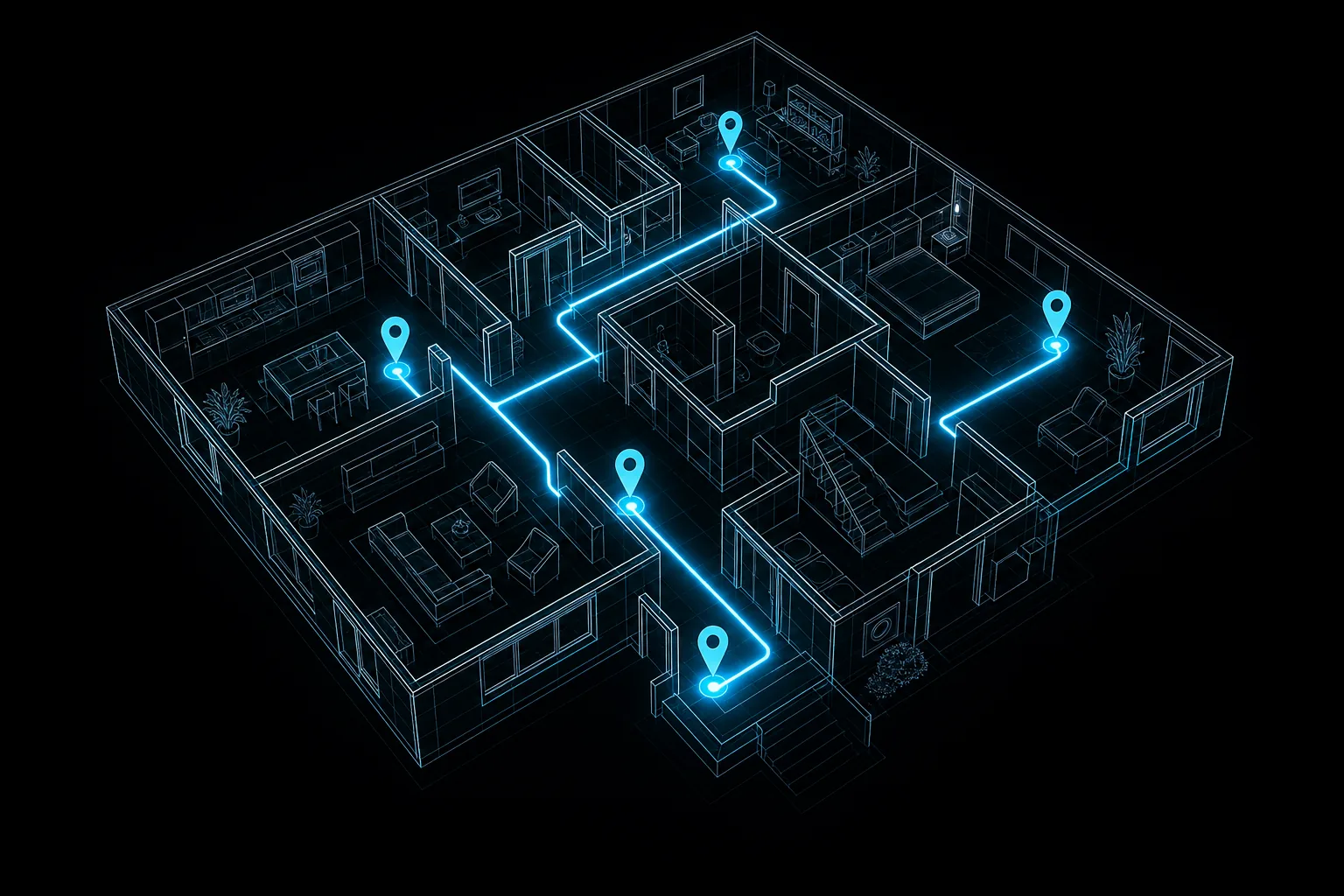
A voice AI kiosk for mall wayfinding is a screen that visitors simply talk to. They ask "where is the pharmacy?" in Arabic or English, and the kiosk answers out loud while drawing the route on a 3D map of the building. Voice handles the question; the map removes any doubt about where to walk.
Why are venues adding voice kiosks?
Because visitors get lost. In a 2026 survey of nearly 500 visitors to malls, airports, stadiums and hospitals, 53 percent had navigation problems in the past six months, and visitors using digital maps found new stores 62 percent more easily (Mappedin Venue Experience Report). In a study of 498 mall shoppers, 78.5 percent wanted a system to guide them to specific shops and 47.2 percent were unhappy with existing signage (Buildings journal, MDPI). It pays: digital directories in three Canadian malls were linked to a 3 to 6 percent rise in store sales (Trecster study).
Language matters too. Non-Bahrainis make up 53.5 percent of Bahrain's residents (iGA data, via GLMM), so a Gulf venue kiosk has to work in Arabic, English and more. The global digital human kiosk market was worth USD 538 million in 2025, with about 103,577 units sold at an average of USD 5,192 each, and is forecast to reach USD 1,256 million by 2032 (QYResearch, via Valuates). Voysera already runs voice kiosks at GFH Tower in Bahrain.
How does it work, step by step?
- The visitor speaks. No buttons or menus, in Arabic, English or another language.
- The agent understands the request. "Somewhere to pray", "kids' shoes" or "the Starbucks near the cinema".
- It matches the venue directory. Store names, categories, opening hours and facilities.
- It answers and shows the way. A spoken answer, plus a 3D route from the kiosk to the destination.
- It offers what is useful next. Opening hours, current promotions or the nearest parking exit.
Why voice plus visuals works better
- Voice captures the intent; the map removes ambiguity about location.
- Arabic and English speakers get the same guided experience.
- Staff stop answering the same directions at peak hours.
- The same agent can answer store hours, offers and services.
What should a venue measure?
| Metric | Why it matters |
|---|---|
| Questions answered per day | Shows demand and staff time saved |
| Top requested places | Feeds tenant reports and signage fixes |
| Language split | Shows who your visitors really are |
| Busiest hours | Guides staffing and kiosk placement |
Where else does it fit?
Hospitals (departments and clinics), airports (gates and services), and government service centres (which counter and what documents). A voice-and-map concierge is often the easiest first step towards a full Arabic AI avatar.
Common questions
Does the visitor need an app?
No. They walk up and speak. The route appears on the kiosk screen.
Which languages does it speak?
Arabic dialects and English as standard, with 70+ languages available on the Voysera platform.
What does the venue need to provide?
A floor map, the store and facility directory with opening hours, and the kiosk hardware. Updates to the directory go live without rebuilding the agent.
Explore a concierge pilot for your venue.
كشك ذكاء اصطناعي صوتي لإرشاد زوار المراكز التجارية بخرائط ثلاثية الأبعاد
كشك الإرشاد الصوتي شاشة يتحدث إليها الزائر مباشرة. يسأل «وين الصيدلية؟» بالعربية أو الإنجليزية، فيجيب الكشك بصوته ويرسم المسار على خريطة ثلاثية الأبعاد للمبنى.
- 53٪ من زوار المراكز التجارية والمطارات والمستشفيات واجهوا صعوبة في التنقل خلال ستة أشهر (Mappedin، 2026).
- 78.5٪ من المتسوقين يريدون نظامًا يرشدهم إلى متاجر محددة.
- الأدلة الرقمية في ثلاثة مراكز كندية ارتبطت بارتفاع المبيعات بين 3 و6٪.
- ڤويسيرا تشغل أكشاكًا صوتية في برج GFH بالبحرين.
كيف يعمل؟
- يتكلم الزائر دون أزرار أو قوائم.
- يفهم الوكيل الطلب ويطابقه مع دليل المتاجر والمرافق.
- يجيب ويعرض المسار من الكشك إلى الوجهة.
- يقترح ما يفيد بعدها: مواعيد العمل أو العروض أو أقرب مخرج.